
Using Emotion to Facilitate Performance
Introduction
Some people know how to use their emotions so that they successfully live their lives in line with their values and reach their goals.
Four different ways in which emotions can be used to facilitate performance:
i) relationship management (need to understand how the expression of your emotions can influence others
"...past research findings suggest that expressing an emotion can cause other people to experience the same emotion so that the emotion spreads from one person to another..."
Hatfield et al as quoted by Seph Fontane Pennock et al, 2019
Furthermore, emotions can induce complimentary emotions in other people, eg
- when you are expressing anger, it may influence other people who are witnessing the anger to feel fear, or even anger itself
- when you express gratitude, it can evoke feelings of pride in the receiver of the gratitude.
"...Emotions can be used to influence one's social environment, and emotionally intelligent people utilise this skill to move towards personal goals..."
Seph Fontane Pennock et al, 2019)
ii) needs and values (this involves extracting and using motivational information from emotions to achieve your goals; emotions serve as a signalling function that can be perceived as data that can be evaluated to determine its authenticity, ie how well you are living in line with your personal values and goals, eg negative emotions like
- fear inform the individual that something valuable is under threat
- shame or regret may inform the individual that his actions are incongruent with his values or goals.
In contrast, positive emotions, like joy or gratitude, may signal that the individual is living in alignment with his personal values and goals.
"...The ability to extract this information from emotions allows the individual to use emotion as 'signals' at the service of his values and goals..."
Seph Fontane Pennock et al, 2019
iii) creativity (positive emotions encourage divergent thinking, eg expand thought-action repertoires and an upward spiral of positive emotions; conversely, negative emotions narrow thoughts and encourage convergent thinking, ie to focus on the specifics of a problem and not think laterally:
"...The generation of positive emotions may directly promote goal achievement by enhancing creativity......Positive emotions may enable the emotionally intelligent person to either generate creative solutions to goal-related challenges or consider alternative pathways to the goal he or she is striving for..."
Seph Fontane Pennock et al, 2019
iv) coping (using positive emotions to handle obstacles, setbacks, etc during daily living; understanding emotions and possessing a great variety of resources like, tools, techniques, knowledge, etc to effectively handle emotions, especially the negative ones.
"...resilient people better understand the benefits of positive emotions and harness these benefits to their advantage to effectively cope with negative emotional experiences..."
Seph Fontane Pennock et al, 2019
Some strategies to elicit positive emotions to regulate negative emotional situations include humour, relaxation, exploration of behavioural alternatives, optimistic thinking, etc.
Research findings suggest that positive emotions can facilitate goal progress by enhancing the coping with impacts of the negative emotions.
Summary
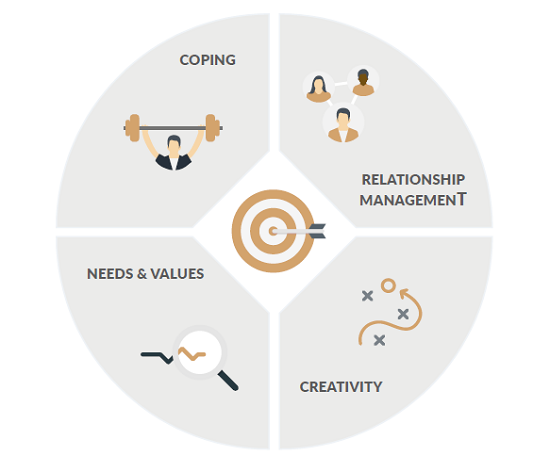
(source: Seph Fontane Pennock et al, 2019)