
Emotion-regulation framework
Introduction
Emotions develop and can become more intense over time.
"...down-regulating emotion is easier done in the early stages of the emotional progress..."
Seph Fontane Pennock et al, 2019
The framework starts with a situation, that can be imagined or real, that triggers an emotional reaction.
Framework (5 stages)
i) situation selection, ie stage 0 (involves placing yourself in a situation where either an unwanted emotion is unlikely to occur or a desired emotion is likely to happen, eg
"...a person who is afraid of being rejected by strangers may avoid social situations where they may encounter new people. Likewise, a person who wants to experience joy may decide to hang out with a good friend..."
Seph Fontane Pennock et al, 2019)
ii) situation modification, ie stage 1 (involves modifying your current surroundings in order to change your emotional response to this environment, eg you might walk away from an unpleasant conversation at a social gathering)
iii) attentional deployment, ie stage 2 (involves directing attention in order to influence your emotional response, ie change the course of an emotion, eg closing your eyes when watching a scary scene in a movie; shifting from negative thoughts to positive thoughts; ignoring a person within you usually have uncomfortable conversation)
iv) cognitive change, ie stage 3 (involves altering the way you think about the trigger for an emotion.
"...By thinking differently about the emotional situation, the meaning of the situation changes..."
Seph Fontane Pennock et al, 2019
One way to do this is reappraising, ie reframing an event to reduce its negative impact; some examples:
- after making a poor decision, think about what you have learnt from this mistakethink about what you have learnt from this mistake
- when forgetting to bring your lunch to work, consider this as a weight loss opportunity.)
v) response modulation (this involves dealing with an emotion that is fully activated, eg
- trying to suppress anger when an irritating person keeps asking the same question
- trying to suppress the feeling of fear to prevent you from acting on it.
Summary of framework
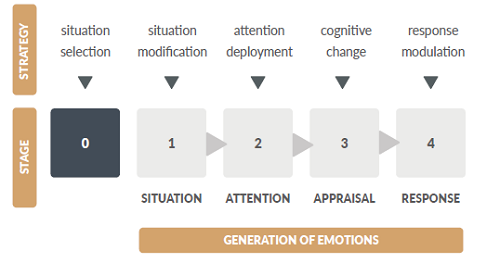
(source: Seph Fontane Pennock et al, 2019)