Framework 207 Head, Heart and Gut Framework
Introduction
The head, heart, and gut decision-making framework is a powerful way to understand how people approach choices, especially in change situations. Each element represents a different source of wisdom we draw on:
Head – Rational Thinking
- What it is: Logical, analytical, fact-based reasoning.
- How it works: You weigh evidence, assess risks, compare options, and make pros/cons lists.
- Strengths: Objectivity, clarity, strategic foresight.
- Risks if overused: Can lead to “analysis paralysis” or ignoring human/emotional factors.
Example: A leader uses data on student outcomes to decide which teaching program to adopt.
Heart – Emotional Intelligence
- What it is: Feelings, values and empathy that influence decisions.
- How it works: We consider how choices affect ourselves and others emotionally, socially, or ethically.
- Strengths: Builds trust, motivates buy-in, aligns with personal/organisational values.
- Risks if overused: Can lead to overly people-pleasing or emotionally-biased decisions.
Example: A principal chooses a program not just for scores, but because it fosters student wellbeing and inclusivity.
Gut – Instinct & Experience
- What it is: Intuition developed from lived experience, pattern recognition and tacit knowledge.
- How it works: The “fast” brain draws on past lessons and subconscious processing to sense what feels right.
- Strengths: Quick decisions, experiential wisdom and confidence in uncertainty.
- Risks if overused: May rely on bias, outdated experience, or ignore new data.
Example: A teacher senses a particular lesson plan won’t work with their class dynamic, even before trying.
Balanced Decision-Making
The best decisions integrate all 3:
- Head ensures rational soundness.
- Heart ensures values alignment and empathy.
- Gut ensures practical wisdom and speed.
In change communications, this means:
- Use head: Share evidence and rationale for change.
- Use heart: Tell stories that connect emotionally and show care.
- Use gut: Draw on lived experience of staff, students, and community to sense feasibility.
Summary
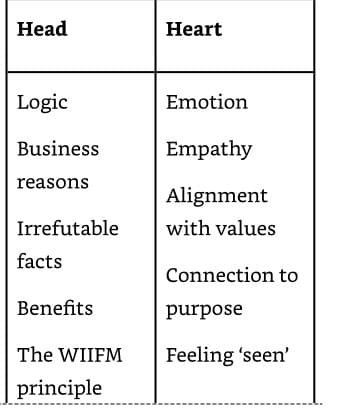
“… ‘head’ messaging is about drawing on the most relevant facts to provide a bank of evidence to support a decision. People need to know decisions aren't just made on whims, but there is solid reasoning that contributes to the change. It's hard to dispute when you have that evidence. When it comes to the ‘heart’ messaging, this is really where we focus on people, how they will likely respond, and call on the ‘thoughtful’ principle in force. The emotions we draw on in the messaging of a sleep also depends on the type of change - the emotions can be solemn, furious, through to extremely excited. This messaging draws on people's values, and the bigger purpose of an organisation…”
Mel Loy, 2024
Decision-making requires a balance between the head and heart; with the gut (intuition, instinct, experience, etc) also being involved.
The logic part of the brain is the prefrontal cortex, while the emotional part is the anterior insula.