
Technique 5.36 Ripple Impact of Emotions
Introduction
The aim is to help someone become aware of how their emotions influence others (the ripple effect); to use that awareness to promote more positive emotional contagion and to regulate negative emotional spread.
|
Component |
Description/Purpose |
|
Step 1: Self-Awareness/Emotional Check-In |
The person identifies their current emotional state: what they feel, how strong it is, what triggered it. |
|
Step 2: Map the “Ripple” |
Reflect on who is around them (family, friends, coworkers, strangers) and how their emotional state might influence each person. For example: “If I’m anxious/stressed, how might that affect my children? My teammates? My partner?” |
|
Step 3: Predict & Observe Impact |
Predict: imagine what might happen (tone of voice, interactions, mood shifts). Then observe real interactions: does the emotional state seem to ripple? Take note of feedback or observable changes. |
|
Step 4: Amplification of Positive Emotions |
Deliberate actions to spread positive emotions: expressing gratitude, kindness, calmness, support, etc. Perhaps using small gestures or verbal affirmations. |
|
Step 5: Regulation of Negative Emotions |
Strategies to contain or reduce spreading negative states: pausing, breathing, reframing thoughts, practising mindfulness, choosing when and how to express emotions. |
|
Step 6: Reflection |
After interactions, reflect on what happened: did emotion ripple? In what way? What was helpful? What to do differently? This might involve journaling or group discussion. |
Key Psychological Foundations
- Emotional contagion/mimicry: how emotions spread via nonverbal cues and interaction.
- ‘Broaden-and-build’ theory: positive emotions build social and personal resources, which is potentiated when they spread.
- Emotion regulation: being aware of one’s emotional triggers and responses so one can manage their emotional ripple.
How the tool might be used
- Individual coaching or therapy: as a weekly exercise to increase self-awareness and impact.
- Groups or team settings: used as a workshop activity to build emotional intelligence, empathy, and group cohesion.
- In leadership training: to help leaders understand the emotional climate they create.
Appendix: Ripple effects from emotions
Context: ______________________________________________
Person(s) involved: ______________________________________________
Setting: ______________________________________________
Trigger: ______________________________________________
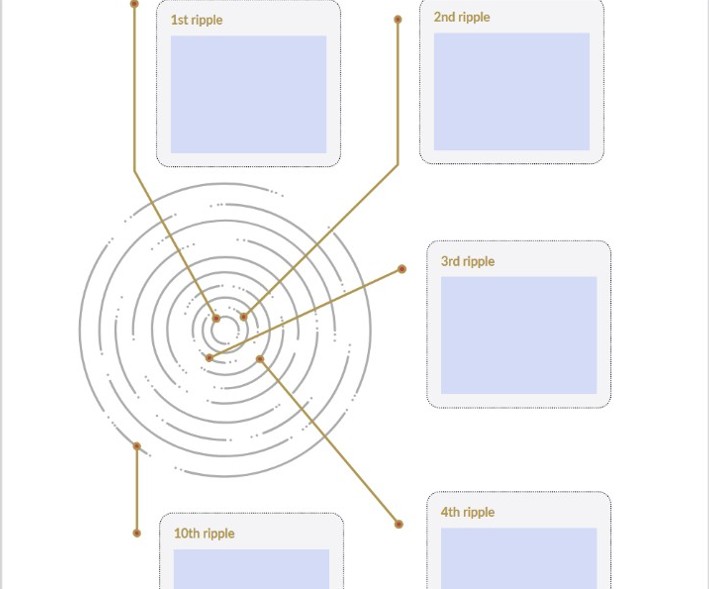
(source: Hugho Albert, 2025)