
Common Management Errors cont.
Cxxxxvii) Not building adequate change capacity (the traditional models of organizational change are often linear and project-focused. This is insufficient for today’s rapidly changing environments. Instead, organizations need to build ongoing capacity to change, not just manage isolated change initiatives.
(for more details, see elsewhere in the knowledge base)
Building Organizational Change Capacity
Introduction
The traditional models of organizational change are often linear and project-focused. This is insufficient for today’s rapidly changing environments. Instead, organizations need to build ongoing capacity to change, not just manage isolated change initiatives.
Key Concepts
1. Change Capacity vs. Change Readiness
- Change capacity is broader and more sustainable than simple change readiness.
- It refers to an organization’s ongoing ability to initiate, implement and sustain multiple changes over time.
Why This Matters
- Organizations face continuous, unpredictable change rather than discrete projects.
- Traditional mechanistic models often fail because they assume change is linear and episodic.
- A sustainable approach emphasizes learning, adaptation, culture and infrastructure to enable organizations to thrive through ongoing change.
Approaches to Change
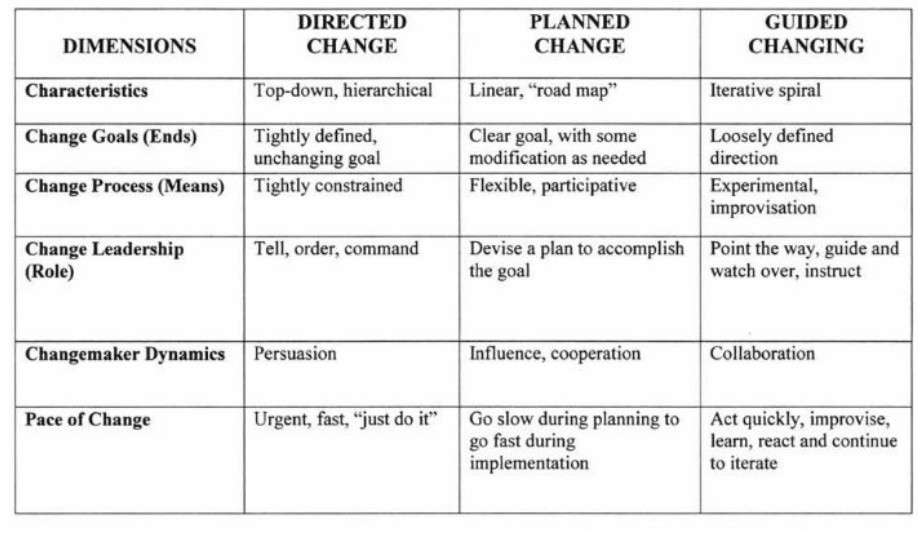
There are 3 basic approaches to implementing organizational change:
- Directed Change (top-down, authority-driven efforts, etc.)
- Planned Change (pre-arranged, roadmap-based initiatives, etc.)
- Guided Change (more emergent, participatory approaches, etc)
Building change capacity means leaders must be able to diagnose situations and choose the appropriate approach based on context, rather than relying on a single method.
(source: Anthony F. Buono, et al, 2010)
Three Levels of Intervention for Sustainable Change
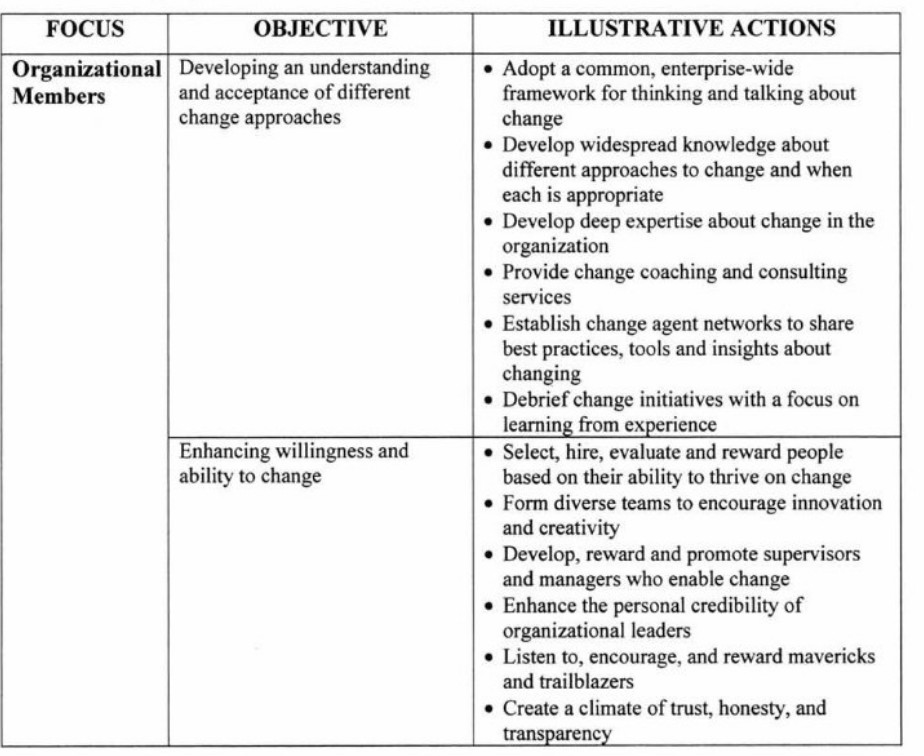
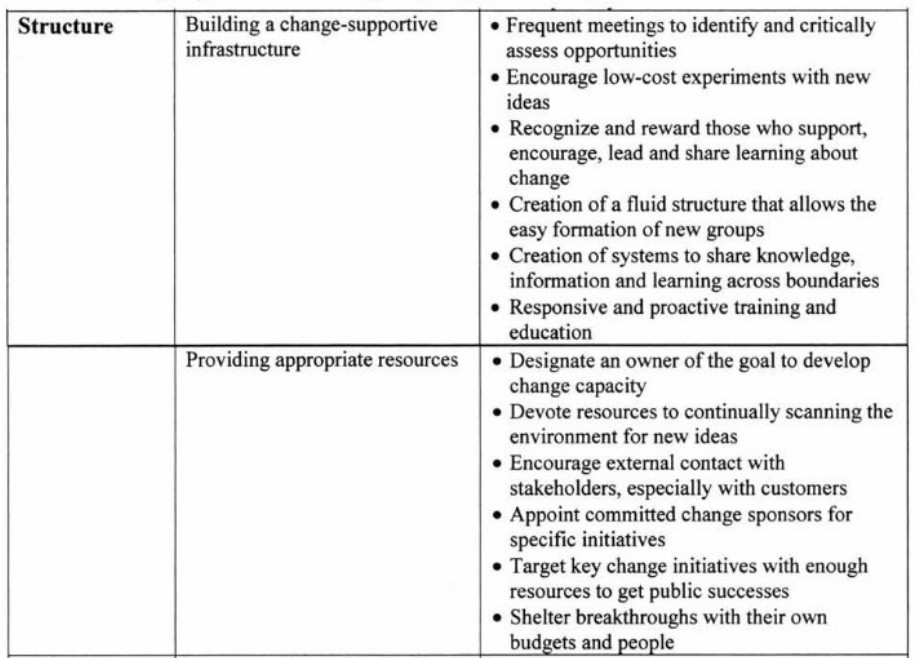
Change capacity can be achieved via interventions at 3 levels:
1. Micro-level (People & Mindset)
- Focus on organizational members:
- Understanding and accepting different approaches to change.
- Enhancing individuals’ willingness and ability to change.
- This includes cultivating learning, adaptability and reducing resistance among people.
2. Meso-level (Structures & Resources)
- Build organizational systems that facilitate change, such as:
- Change-supportive processes.
- Sufficient resources and infrastructure.
- This prepares the organization structurally to undertake change initiatives effectively.
3. Macro-level (Culture & Strategy)
- Develop a culture that embraces change and supports innovation.
- Encourage ongoing strategizing rather than treating change as episodic.
- Culture and strategy must continuously evolve together.
Building Change Capacity
(source: Anthony F. Buono, et al, 2010)
Summary
This shifts the focus from “managing change” to building an organization’s capacity to change. This requires developing:
- People who understand and embrace change
- Structures and resources that facilitate it
- A culture and strategy that make change continuous and integral to organizational life.